-2833Days
-15Hours
-24Mins
-11Secs
Not many WordPress users, especially the beginners to the platform, know that the website is great from both ends – front end (website interface) and back-end (admin interface).
WordPress admin dashboard is a thing of beauty that’s practically renowned for its user friendliness (UX) and sleekness. This one element has undergone many makeovers, but over all this time it has still retained its inherent usability.
Now WordPress pros might already be aware of the Screen Options button on their admin dashboard which will let them customize what to show or hide, but not the newbies.
In this post, I’ll share a few quick and easy ways for you to improve the UX of your WordPress admin dashboard, all by yourself; no coding necessary.
1. Menu items (Sidebar)
As a content marketer/ blog owner, you aren’t likely to use many of the purely technical settings and menu items available by default on WordPress admin dashboard.
And although I’m not discouraging you from learning how to use them, your own website/ blog isn’t something you should be taking risks with in order to learn by experimentation.
To this I say: Out of sight, out of mind. You can resist the temptation of fiddling around with settings you have no clear idea of by removing them from the admin dashboard altogether (not permanently, just until you learn your way around them).
In order to make this happen, go to ‘Screen Options’ page from your WordPress admin dashboard. This page (or screen) will show you a drop down menu which contains all the currently enlisted settings’ tabs in your WordPress dashboard. By default, it includes taxonomy (tags and categories), Comment moderation (queues and spam control), SEO (permalinks and SEO plugin settings), various post formats (as created by your theme), and so on. There you can easily remove all the menu items that are of no direct use to you on a day to day basis.
While you are there, make sure to reorder the settings’ tabs by order of priority or any other way that makes sense to you. For instance, if your primary concern is to publish content, make sure the publishing settings and SEO configuration screen are right on top. To do this, simply drag and drop the settings’ tabs to reorder them.
2. Comment Moderation Screen
Comments are essential for reader engagement. An appropriately active comment section is practically a sign of good, loyal, and most importantly, an opinionated readership. Add to that the fact that you can get the comments indexed by search engines, and you’ll see why so many blogs invite comments on their posts despite knowing that over 99% of it is going to be redundant and/or spam.
Disabling the comment section entirely is the cowards’ way out: so buck yourself up to deal with massive amounts of comment spam with plugins like Akismet, Jetpack, and WP SpamShield AntiSpam. Other than that, you can make moderation easier for yourself as an admin in times of heated debates.
This can be done by modifying default WordPress admin dashboard settings – simply go to Screen Options >> Comments >> Author >> In Response to. This will let you increase the number of comments visible to you at any given time in the comment moderation queue (‘Items per page’ setting)
3. Access Control
User Roles and Capabilities – aka WordPress’ own way to bring corporate hierarchy to online website management is pretty straightforward way to grant or restrict access to some of the more delicate site features to only those who are concerned with it. Even by default, it works well for many websites. But yours might not be one of them.
To fiddle around with User roles and capabilities, you need the User Role Plugin. This will let you easily customize and even create user roles and define the features they can access.
4. Admin Dashboard Plugins
Why would you think there won’t be a plugin that will let you customize your admin dashboard itself? Given below are some of the most commonly used (and free) WordPress dashboard customization plugins:
• R3DF Dashboard Language Switcher
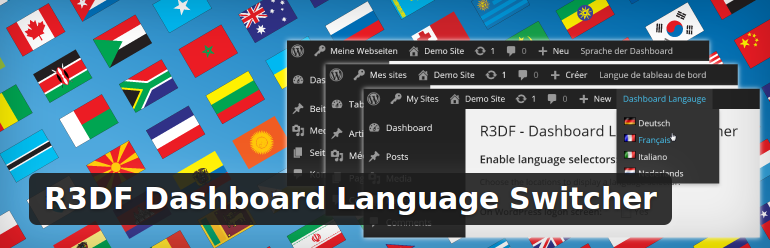
This one is a simple plugin which does what it says on the tin – gives your backend managers/ executives a way to switch the dashboard interface language to one of their choices.
R3DF is multisite compatible and basically just adds a language switching option on your admin dashboard, login screen, and user profiles for all users. Keep in mind that the plugin itself won’t translate the interface: you have to add those manually by visiting your General Site settings screen and installing the core translations. Also: since themes and plugins need to have those exact same translations for their settings interface to be translated or they’ll show up in plain English.
• Mojo Admin Toolbox
This one is fairly popular with WordPress development companies and freelance developers who create entire sites from ground up to client’s exact specifications. Mojo Admin Toolbox lets a developer (or anyone with a little experience with WordPress settings) customize the dashboard screen.
You can hide/show comment moderation queues, add/ remove admin dashboard widgets (works with user roles), hide/ show specific settings within the main tab (user role compatible), edit dashboard footers, and more.
• WPBizPlugins Custom Admin Help Boxes
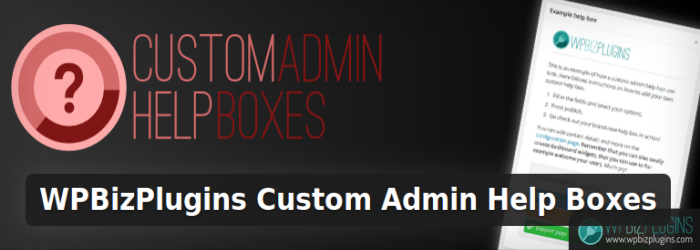
Another perfect tool for WordPress customization companies or freelance developers is WPBizPlugins Custom Admin Help boxes.
The plugin will let you (the developer) add a set of custom instructions for the intended dashboard users, which can be a huge help if they aren’t exactly tech-savvy and it falls on the developer’s head to familiarize them with the system. The instructions can be added and edited over default instructions and help box texts. You can also add them as rich media (images, audios, videos, etc.) tutorials, along with links to support forums or helpdesk.
Endnote
And this is just the beginning of the extent to which you can customize your WordPress admin dashboard. You can also white label (rebrand) the dashboard and login screens (See plugins like Ultimate Branding for that exact purpose), add custom welcome message (replace the old-school ‘Howdy!’ to something more fitting with your own culture), or even ask your developer to jazz it up with WordPress dashboard themes.
Now you know what we mean when we say WordPress is flexible.
Category: General Tips and Tricks
Tags: learning wordpress wordpress tips
- Divider With No Text